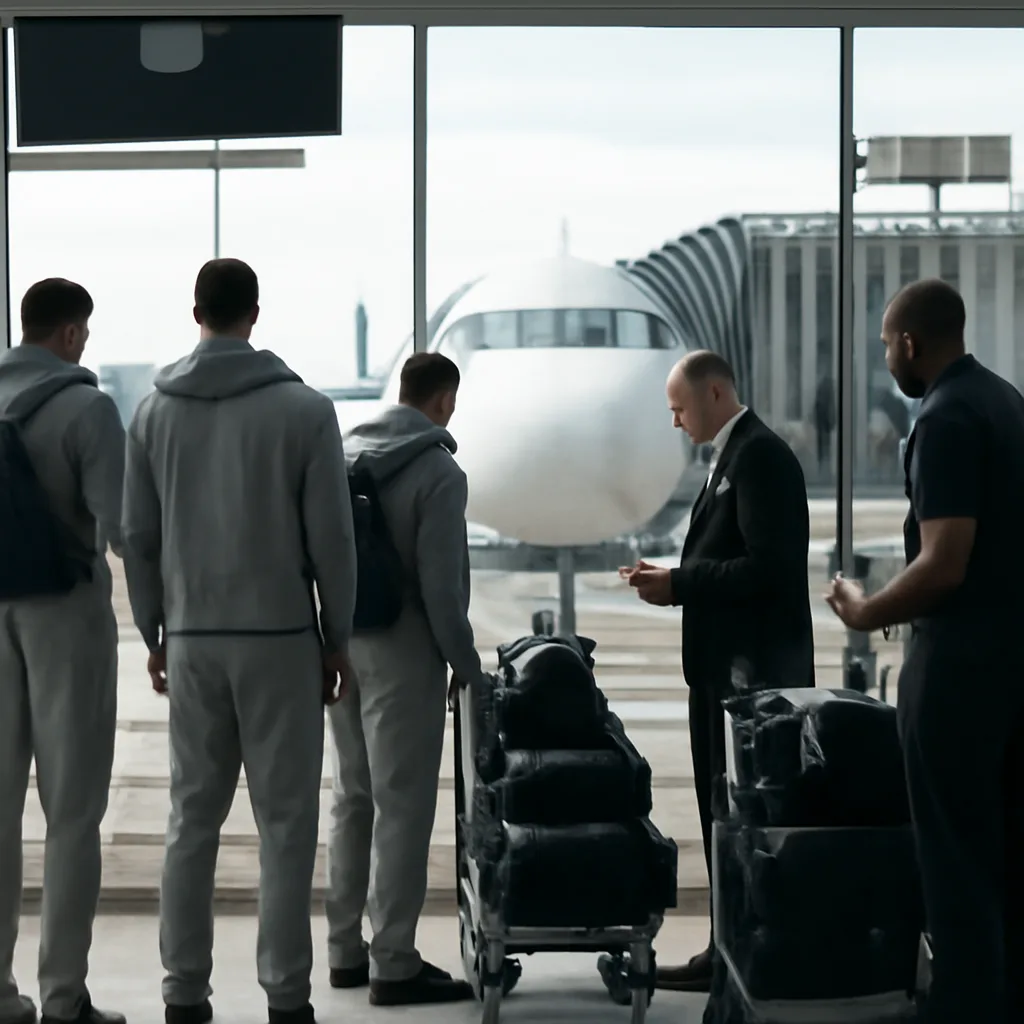
A college basketball team missed its scheduled away game after boarding the wrong aircraft at the departure airport. The error was discovered only after the game time had passed, leaving the team unable to travel to the opponent's venue as planned and forcing the game’s postponement or cancellation pending league decision. According to public accounts of similar incidents, such travel mistakes typically involve miscommunication among team staff, airport gate changes, or ticketing and boarding-pass mismatches. Teams traveling on chartered flights usually coordinate closely with school athletic departments and travel vendors; when commercial flights are used, there is greater room for confusion about gates and connections. Either scenario can result in a team arriving at an incorrect aircraft or missing a flight altogether. Immediate consequences for the team included disruption to players’ schedules, lost competitive opportunity, and logistical challenges in arranging alternate travel. The opponent and the hosting venue also faced last-minute changes: staff and security plans, ticket-holders’ expectations, and broadcast arrangements (if any) were affected. The league or conference typically reviews circumstances to determine whether a forfeit, rescheduling, or other remedy is appropriate, guided by league bylaws and the specifics of the incident. Investigations in such cases usually focus on: who held responsibility for travel arrangements (athletic department, third-party charter operator, or commercial carrier); what communication occurred among coaches, administrators, and airport staff; and whether team members carried correct identification and boarding documentation. If third-party vendors were involved, contractual obligations and provider performance are scrutinized. Schools may also examine internal protocols for preflight checks and gate confirmations. Longer-term outcomes can include stricter preflight procedures, designated staff to oversee boarding, changes to vendor contracts, or discipline for staff if negligence is documented. Athletic programs commonly update checklists that require multiple verifications of flight numbers, departure gates, and passenger manifests before boarding. Leagues may also clarify travel policies to prevent similar disruptions for other teams. For fans and stakeholders, the most immediate concern is when and how the missed game will be made up, and whether competitive fairness is preserved. Rescheduling depends on both teams’ calendars, venue availability, and the broader season timetable. If the league decides not to reschedule, standings and postseason implications can be affected, prompting further review of league rules and appeals processes. This account summarizes the typical sequence and implications when a team boards the wrong plane and misses a game. Specific factual details—such as the school involved, the date, and league rulings—should be obtained from official statements by the institutions and the league handling the incident.