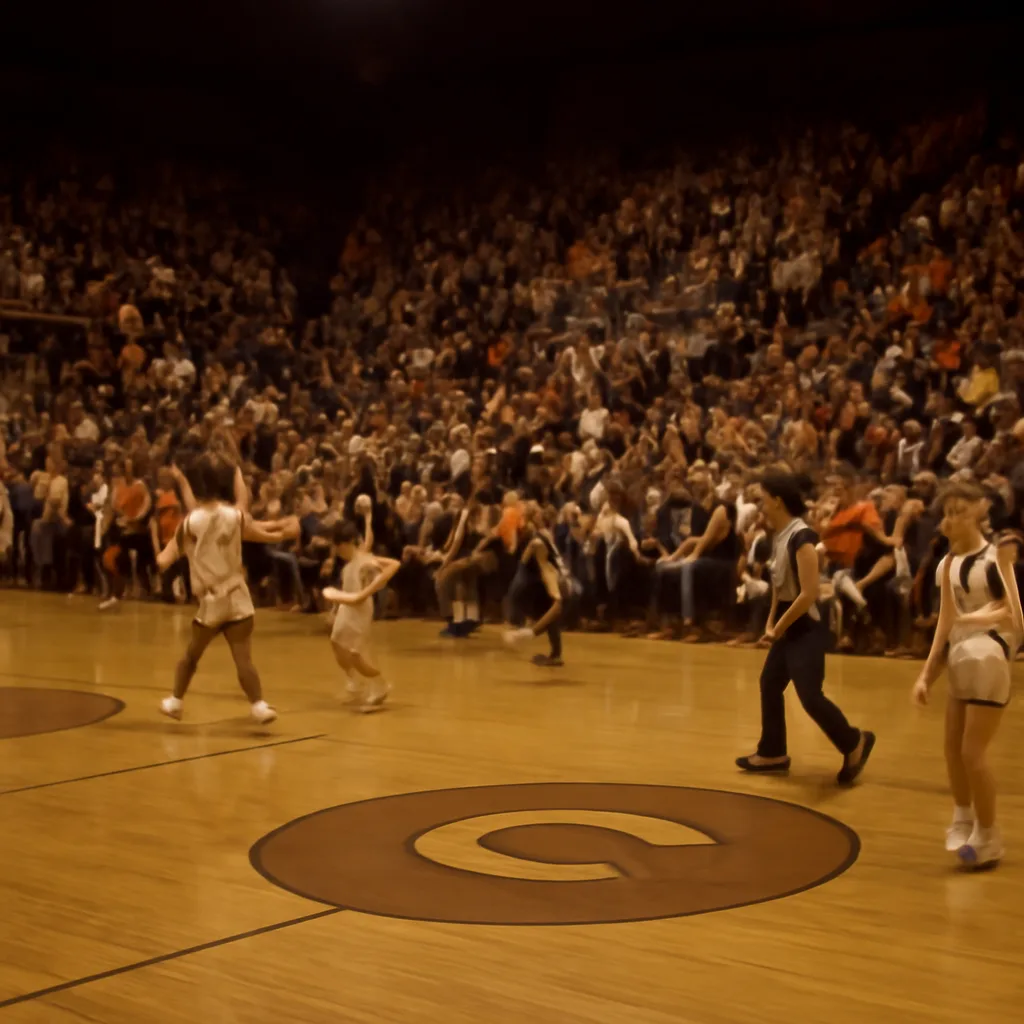
On Dec. 19, 1979, a college basketball contest was interrupted and subsequently abandoned when spectators rioted and stormed the court, creating conditions that officials deemed unsafe to continue. Contemporary press accounts from that period describe chaotic scenes in which large numbers of fans entered the playing surface, obstructing players, officials and emergency personnel and rendering orderly resumption of the game impossible. The late 1970s featured intense regional rivalries and passionate crowds at many college arenas; while most games concluded without major incident, there were several notable episodes in which fan behavior spilled over into physical confrontations or pitch invasions. In the December 1979 incident, local reports emphasized that the sequence began with escalating tensions in the stands—accounts differ on the precise catalyst—and culminated in multiple fans running onto the court. Game officials and venue security attempted to restore order, but with the playing surface crowded and team personnel impeded, the referees declared the contest abandoned for safety reasons. Abandonment of a college basketball game is an uncommon outcome and typically prompts immediate administrative and athletic-department responses. Following incidents like the one in December 1979, schools and conferences have historically reviewed security protocols, considered sanctions or ticketing restrictions, and sometimes arranged disciplinary measures against identified participants. Records from the period indicate that universities and local authorities sometimes pursued arrests or ejections for those directly involved, while athletic programs assessed whether to reschedule or forfeit the contested fixture according to conference rules and NCAA guidance then in effect. Contemporary coverage of the event varies in detail and emphasis. Some reports focused on property damage and injuries to bystanders or law enforcement, while others concentrated on the disruption to the season’s schedule and the administrative fallout. Because reporting standards and record preservation from that era differ among outlets, some specifics—such as exact crowd counts, the number of injuries, or whether a formal forfeit was later recorded—are inconsistently documented across sources. Historically, incidents of fan invasions have contributed to long-term changes in arena operations: increased security staffing, redesigned court barricades or stanchions, stricter alcohol policies, and clearer ejection and arrest protocols. The December 1979 abandonment fits within a broader pattern that influenced how collegiate athletic departments and arenas managed crowd control in subsequent decades. This summary does not invent detailed, sourced specifics about arrests, individual injuries or administrative sanctions for this particular game, since contemporary sources vary and some elements remain unclear in publicly available records. For a full account with citations, consult archived newspaper reports from December 1979 for the institutions involved and official statements from the athletic departments or conference offices at the time.