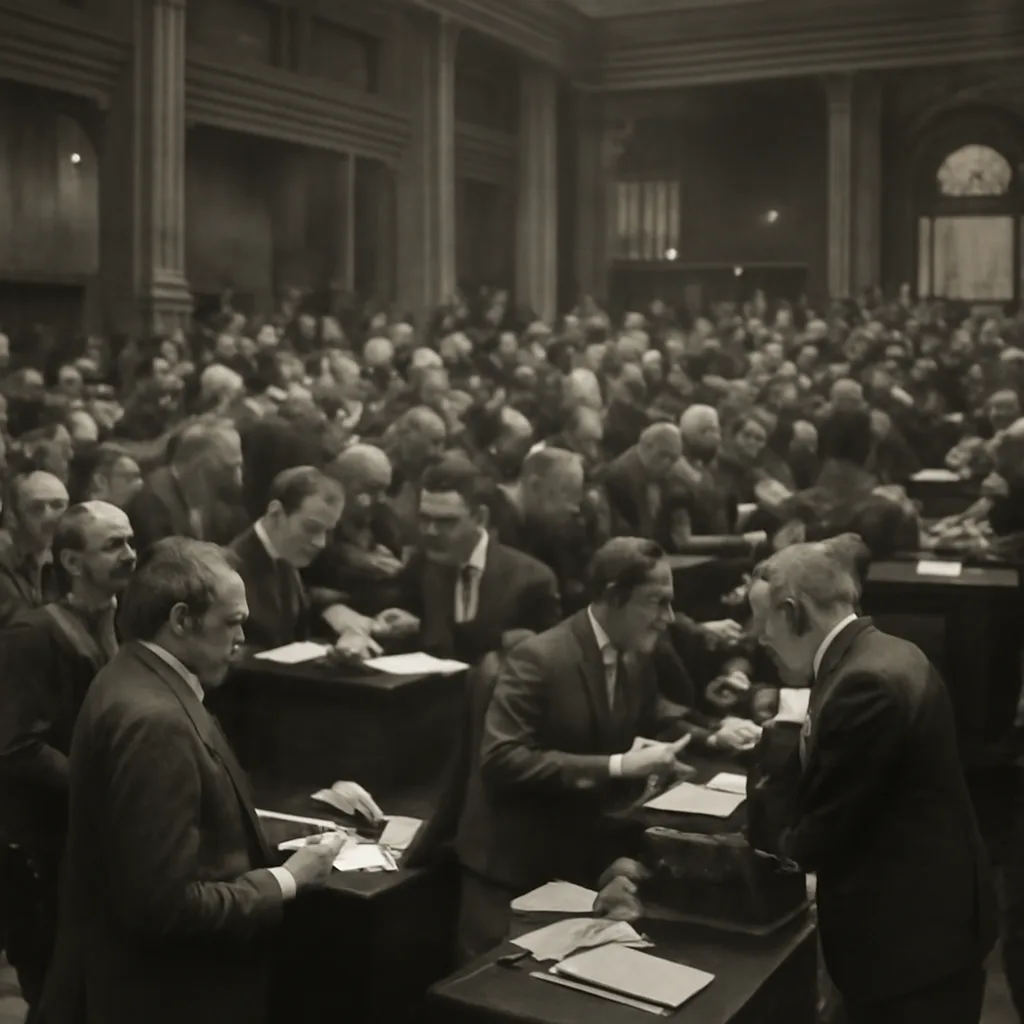
On October 29—widely known as Black Tuesday—trading on the New York Stock Exchange erupted into a catastrophic sell-off that intensified a market collapse already underway earlier that week. Prices plunged amid panicked selling as investors rushed to liquidate positions, overwhelming the exchange and driving share values to precipitous lows. The scale of the day’s declines contributed to a rapid erosion of paper wealth and signaled a broader contraction in confidence that would help precipitate the Great Depression. Context and immediate causes The crash of late October 1929 followed months of speculative excess during the 1920s, when rising stock prices, widespread use of margin buying, and optimistic economic expectations encouraged many investors to take on heavy risk. In the days before October 29, market turbulence had already appeared—most notably on October 24 (Black Thursday) and October 28 (Black Monday)—as large sell orders started price declines and attempts at temporary stabilizing purchases briefly slowed the fall. On Black Tuesday, however, a larger and more sustained wave of selling overwhelmed those efforts. Market dynamics on the day Trading on Black Tuesday was marked by frantic activity and rapidly falling quotations across many industrial and financial stocks. Brokers and clerks worked under chaotic conditions to execute orders; many investors who had bought shares on margin faced margin calls they could not meet, forcing liquidations that further depressed prices. Although exact transaction volume figures vary among sources, contemporary accounts and later studies agree that the day saw record—at the time—trading volumes and steep percentage declines in major averages. Immediate economic and social effects The collapse erased vast amounts of nominal wealth, particularly among shareholders and institutional investors concentrated in equities. The drop undermined confidence in financial institutions and markets, contributing to reduced consumer spending and business investment in subsequent months. While the crash did not by itself cause every element of the ensuing worldwide economic downturn, it played a central role in the sequence of shocks—bank failures, credit tightening, and falling demand—that deepened and prolonged the Depression. Historical interpretation and limits of the record Historians and economists have debated the precise mechanisms by which the October 1929 crash translated into the long, severe economic contraction of the 1930s. Some emphasize structural weaknesses in banking and international finance, agricultural distress, or policy responses that failed to stabilize the economy; others highlight how the crash eroded expectations and triggered a decline in spending. Contemporary sources report the panic and dramatic price movements of Black Tuesday; later quantitative analyses place the crash within a larger pattern of economic deterioration that unfolded over subsequent years. Legacy Black Tuesday remains one of the most-cited symbols of financial collapse in U.S. history. The events of October 1929 prompted changes in regulation, oversight, and public understanding of financial market risks in following decades, even as scholars continue to refine explanations for how the crash and subsequent policy choices combined to produce the Great Depression.