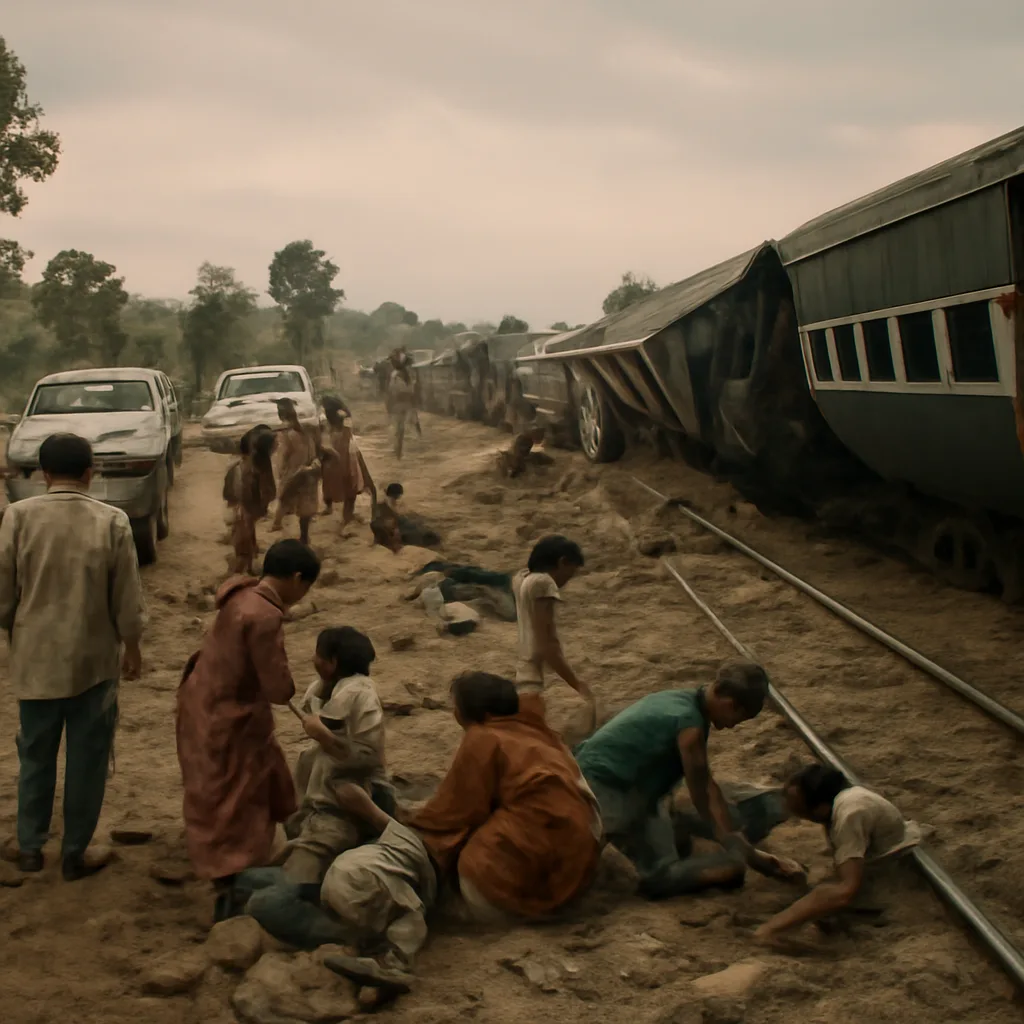
On 28 December 1999, a passenger train derailed near Ghorasahan (sometimes spelled Ghorasahan Road) in the state of Bihar, India. The accident occurred on a heavily used route serving daily commuters and regional travelers. Contemporary Indian news reports and later summaries described multiple deaths and dozens of injuries, though exact casualty figures vary between sources and some details were unclear in the immediate aftermath. Location and context Ghorasahan is a town in the East Champaran district of Bihar. In the late 1990s, the region saw substantial daily passenger rail traffic on mixed-use lines carrying both local commuters and longer-distance travelers. Rail infrastructure in parts of Bihar at that time faced maintenance and capacity challenges, and accidents—ranging from collisions to derailments—were a recurring concern in Indian rail safety reporting. The derailment Reports from the period indicate the derailment happened as a passenger train was traversing the track near Ghorasahan. Wreckage and overturned coaches were described in contemporary coverage, and rescue efforts were mounted by local railway staff, police, medical teams, and volunteers. Exact causes cited in early reports ranged from track problems to mechanical failure; however, available public records and press accounts do not present a single, definitive, and universally accepted cause for this specific derailment. Casualties and rescue Media coverage at the time provided differing tallies of fatalities and injuries. Some reports cited a modest number of deaths with scores injured; others gave higher or lower estimates. Local hospitals received the injured, and casualties were attended to under difficult conditions given the rural setting. The disparity in reported figures reflects the chaotic conditions immediately after the accident and the way information was relayed by multiple local and national outlets. Response and investigation Railway authorities and local officials initiated rescue operations and announced inquiries into the accident. Investigations into derailments typically examine track condition, rolling stock maintenance, speed, signalling and human factors. Publicly available summaries from the period do not give a single, authoritative final investigation report that is universally cited for this derailment; consequently, some aspects of cause and responsibility remain presented with caveats in later accounts. Aftermath and historical note The Ghorasahan derailment of late December 1999 is one among several rail accidents in India during that era which prompted public discussion about railway safety, infrastructure investment and maintenance practices. Because contemporary reports vary on key details, historians and journalists referencing this event generally note the differing casualty counts and the absence of a single definitive public report that resolves all questions about cause. Limitations and sourcing This summary is based on contemporaneous news coverage and later secondary summaries. Where casualty figures, precise causes, or investigative conclusions differ across sources, this account notes that variability rather than asserting disputed details as fact. For precise casualty numbers or an official final investigation report, consult archived Indian government railway accident records or primary contemporary newspaper coverage from December 1999 and early 2000.