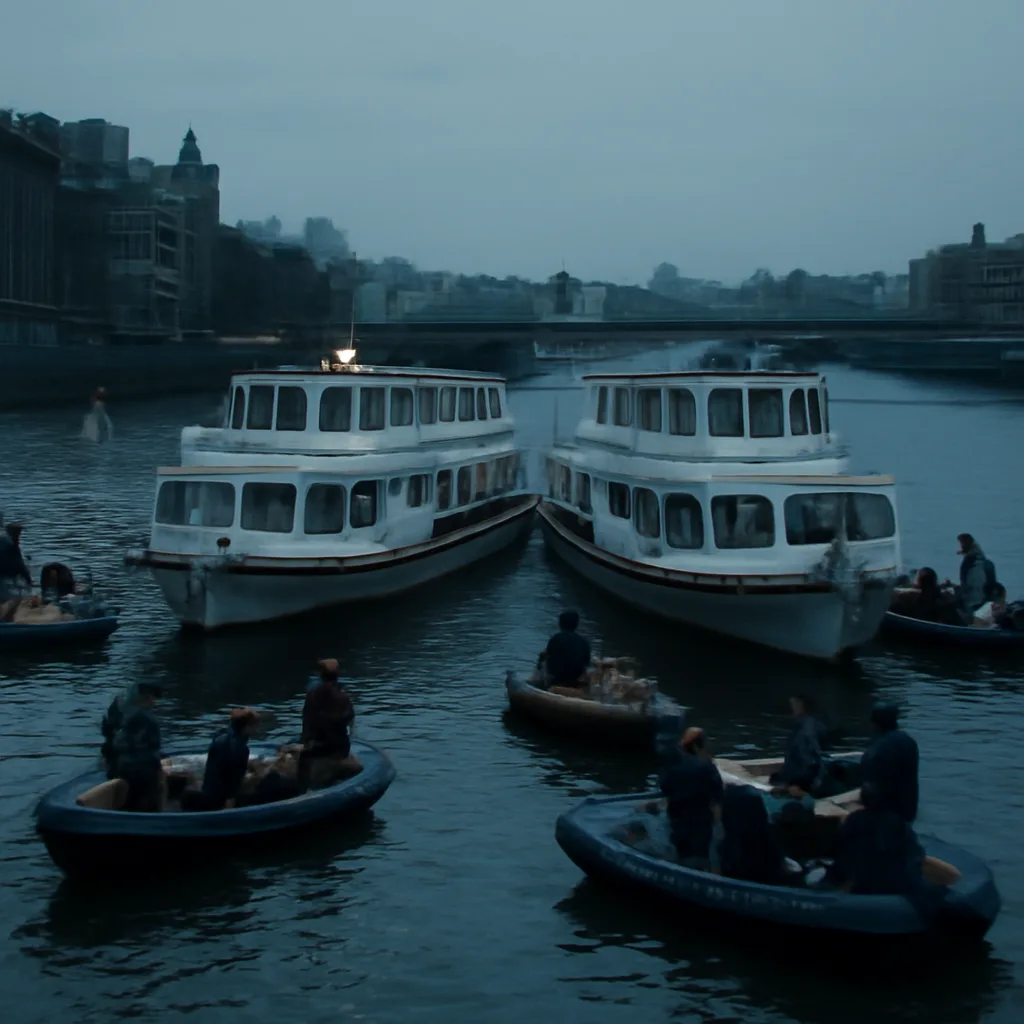
On July 6, 1989, a passenger riverboat collision on the River Thames resulted in a large number of fatalities and numerous injuries, prompting investigations into navigation procedures and vessel safety on the busy London river.
On the evening of July 6, 1989, two rivercraft collided on the River Thames in London, causing a catastrophic loss of life and numerous injuries. The incident occurred on a section of the river regularly used by passenger excursion vessels as well as commercial and working boats. Weather conditions were reported as typical for summer, and the collision took place during twilight hours when visibility was diminishing but before full darkness.
Details about the vessels involved, including their sizes and operators, vary among contemporary accounts. One vessel was a passenger excursion boat carrying civilians; the other was a larger or similarly sized craft operating on the river. Contemporary newspaper reports and later summaries indicate that emergency services, including river police and ambulance units, responded quickly and that survivors were taken to nearby hospitals.
The exact death toll reported at the time and in subsequent summaries differs among sources, but multiple accounts describe dozens of fatalities. The collision prompted formal inquiries focusing on navigation rules for crowded river conditions, the vessels' compliance with safety regulations, crew training, and the suitability of life-saving equipment on board. Authorities examined whether signalling, lighting, or steering failures contributed to the crash and whether vessel operators had adequate experience for nighttime river operations.
The event intensified scrutiny of passenger-carrying vessels on the Thames and led to calls for stricter enforcement of safety standards and clearer separation of commercial and leisure traffic in busy stretches. Investigations recommended—or in some cases resulted in—improvements to lighting, onboard safety briefings, lifejacket availability, and river traffic management, though specific regulatory changes tied directly to this collision varied.
Memorials and remembrances for those killed have been reported in local coverage and by community groups, though comprehensive national memorialization appears limited. Survivors and families of victims campaigned for greater accountability and for reforms intended to prevent similar tragedies.
Because contemporary reports and later summaries are not uniform on precise details such as the exact number of fatalities, vessel names, and investigation findings, readers should consult archival newspaper accounts, official investigation reports, and maritime safety records from 1989 for definitive figures and primary-source documentation.