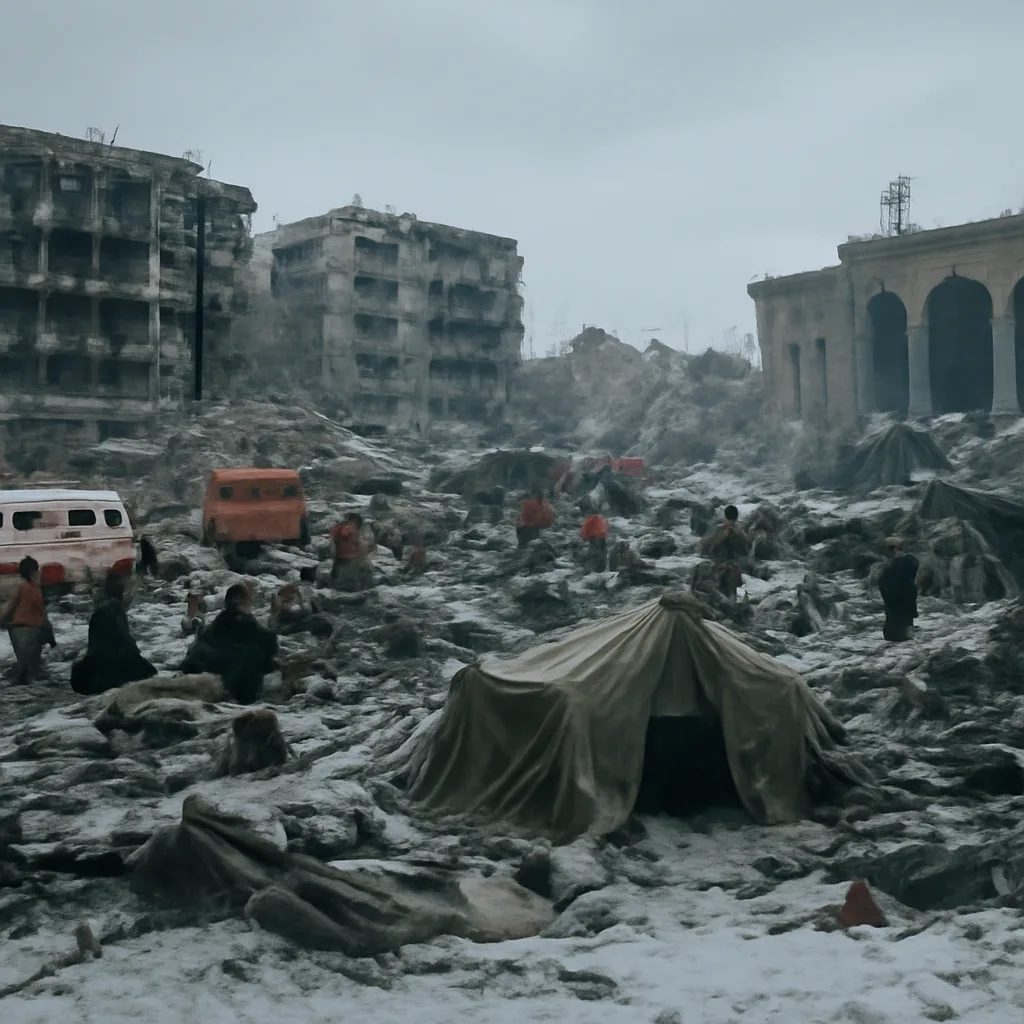
1988 Armenia earthquake devastates cities, kills tens of thousands
On December 7, 1988, a powerful earthquake struck north-central Armenia (then part of the Soviet Union), destroying cities including Spitak and killing an estimated tens of thousands; the disaster prompted an unprecedented domestic and international rescue and relief effort amid Cold War politics.
On December 7, 1988, at 11:41 a.m. local time, a magnitude 6.8 (commonly reported as 6.9) earthquake struck the mountainous, north-central region of the Armenian Soviet Socialist Republic. The epicenter was near the town of Spitak in the Shirak Province. The shallow focus and proximity to populated areas, combined with widespread construction weaknesses, produced catastrophic damage across a broad area.
Human toll and damage
Estimates of casualties vary; Soviet authorities initially reported about 25,000 dead, while later assessments and independent researchers have placed the death toll between approximately 25,000 and 50,000, with many thousands more injured and displaced. The cities of Spitak, Leninakan (now Gyumri), Kirovakan (now Vanadzor) and numerous smaller towns and villages suffered severe destruction. Entire residential neighborhoods, schools, hospitals and industrial facilities collapsed or were rendered unusable. Hundreds of thousands of people were left homeless in freezing winter conditions.
Causes of destruction
A combination of factors contributed to the scale of devastation. The earthquake’s shallow depth amplified ground shaking. Many multi-story apartment blocks and public buildings had been built with inadequate seismic design and poor-quality concrete, making them highly vulnerable to collapse. The regional geology and mountainous terrain also influenced ground motion and secondary hazards such as landslides.
Rescue, relief and international response
The Soviet government mobilized military units, emergency services and civil defense teams to carry out search-and-rescue and recovery operations. Within days, the Soviet Union accepted international aid—a significant development given Cold War tensions—and teams, equipment and supplies arrived from more than 20 countries, including the United States, France, Italy, and others. International rescue teams worked alongside Soviet personnel to search rubble, treat the injured and provide shelter, food and medical supplies.
The relief effort revealed both strengths and limitations. International assistance brought specialized equipment and expertise that aided recovery and raised global awareness of the disaster’s scale. At the same time, logistical challenges, damaged infrastructure, and the sheer number of displaced people complicated distribution of aid and reconstruction planning.
Aftermath and reconstruction
In the years following the earthquake, reconstruction proceeded unevenly. Many survivors spent extended periods in temporary shelters; entire communities were relocated or rebuilt at new sites. The disaster prompted changes in seismic building codes in Armenia and across the Soviet Union, as engineers and policymakers sought to reduce vulnerability to future quakes. The earthquake also had lasting social and demographic effects, including migration from affected areas and long-term psychological and economic impacts on survivors.
Historical significance
The 1988 Armenian earthquake remains one of the deadliest seismic disasters of the late 20th century and a defining event in modern Armenian history. It exposed weaknesses in construction and emergency preparedness, demonstrated the importance of international humanitarian cooperation, and occurred during a period of political change within the Soviet Union. Memorials and annual commemorations continue in Armenia to honor the victims and recognize the resilience of survivors.
Notes on figures
Casualty and damage figures vary across sources; the range given reflects differences in initial Soviet reporting, later government assessments and independent research. Where precise counts differ in the historical record, estimates are provided as ranges rather than exact totals.