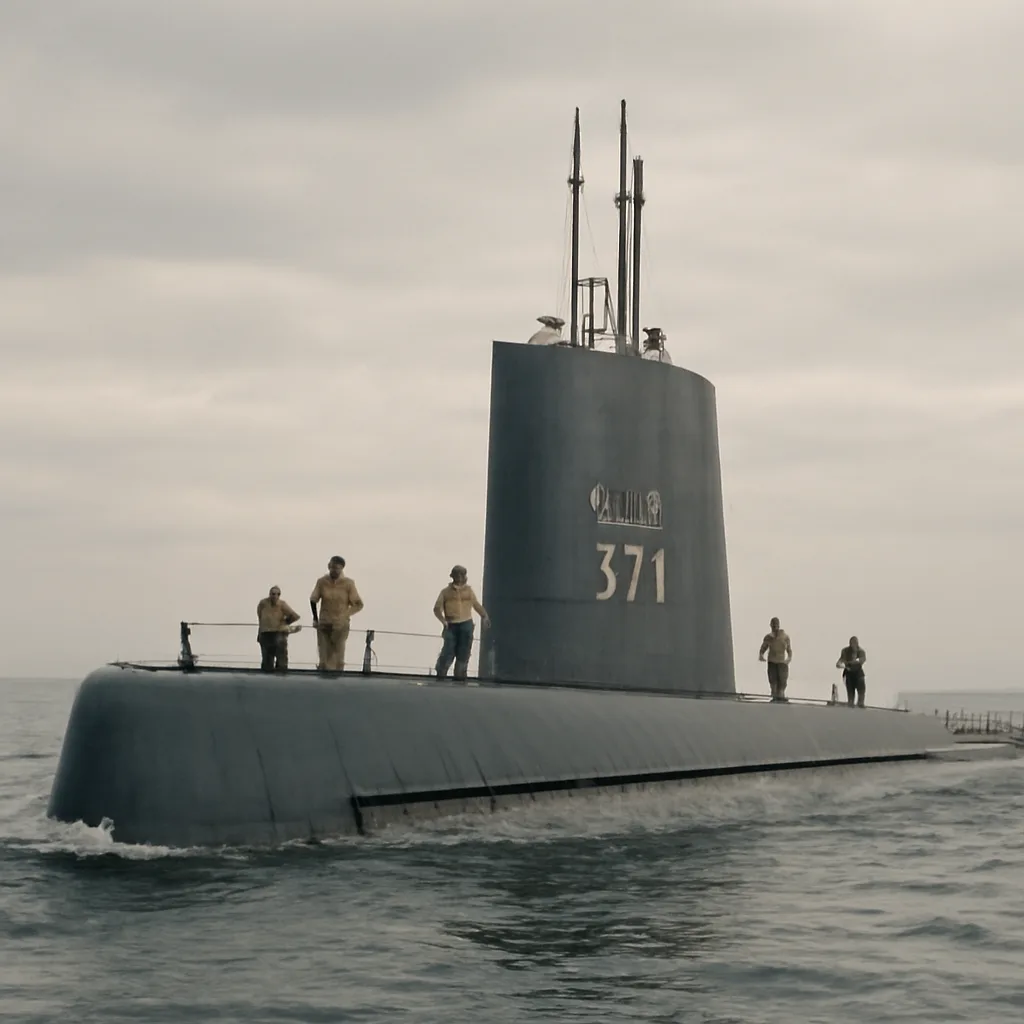
On May 5 (year disputed in early reports), the USS Nautilus (SSN-571), the world’s first operational nuclear-powered submarine, completed what the U.S. Navy and contemporary press described as its first full patrol powered by an onboard nuclear reactor. Nautilus, commissioned in 1954 and powered by a pressurized-water reactor designed under Admiral Hyman G. Rickover’s direction, had already demonstrated revolutionary submerged speed and endurance in earlier trial runs. The patrol consolidated those capabilities into an operational deployment that illustrated how nuclear propulsion could transform undersea warfare. Nuclear propulsion freed submarines from the need to surface frequently to recharge batteries, permitting longer submerged operations and fundamentally changing tactics, surveillance, and strategic deterrence. Nautilus’s patrol put these theoretical advantages into practice: the boat remained submerged for an extended period, maintaining higher sustained speeds and greater operational tempo than diesel-electric submarines of the era could manage. These attributes were quickly recognized by naval planners and strategists as critical to Cold War missions, including anti-submarine warfare, intelligence collection, and, later, ballistic missile submarine operations. The Nautilus story is best understood in context. Launched in 1954 and commissioned the same year, Nautilus was the product of years of research into compact, reliable naval reactors. The ship’s successful early operations—most famously the submerged transit of the North Pole a few years later—are better documented in primary naval records and contemporaneous reporting. Exact dates for specific patrol endpoints in Nautilus’s earliest cruises vary in secondary accounts; some sources emphasize trials and shakedown cruises in 1955 and 1956 as part of establishing operational procedures for nuclear submarines. Operational lessons from Nautilus’s patrols shaped submarine design, crew training, and nuclear safety protocols. Reactor operation required new technical skills and rigorous maintenance routines; long-duration submerged operations demanded adaptations in habitability, logistics, and psychological support for crews. The success of Nautilus helped justify accelerated U.S. investment in nuclear propulsion for both attack and strategic missile submarines, leading to the modern nuclear submarine fleets fielded by several navies. While Nautilus’s achievements were widely celebrated in U.S. sources, contemporaneous and later historians note that full operational integration of nuclear submarines into a navy’s force structure took time. Early boats served alongside conventional submarines while doctrines, support infrastructure, and strategic concepts evolved. Nautilus itself transitioned from experimental and demonstration roles into a symbol and prototype for subsequent classes. Because some accounts conflate trial runs, shakedown cruises, and formal "patrols," readers should treat precise operational-date claims in secondary summaries cautiously and consult primary naval logs or archival sources for definitive timelines. What is clear and well documented is that Nautilus’s sustained submerged operations proved the practicality and wartime promise of nuclear propulsion, altering naval strategy in the Cold War era and beyond.