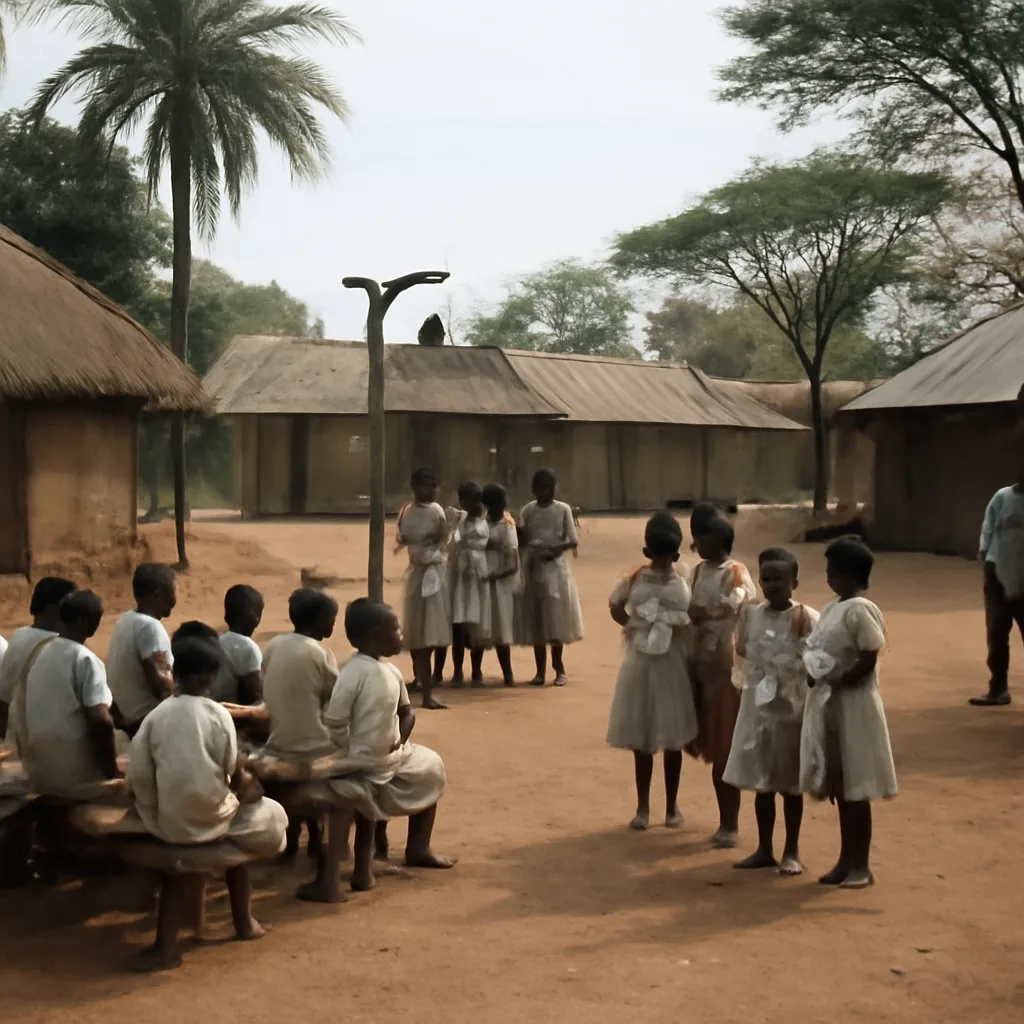
In early May 1962 a small village in what was then Tanganyika (now part of Tanzania) became the focal point of an unusual episode often described in later literature as an “outbreak of mass laughter.” The phenomenon began among a group of schoolchildren and, over several days and weeks, spread to other pupils, teachers and some community members. Affected individuals exhibited bouts of involuntary laughter that could last from minutes to hours, frequently accompanied by crying, pain, fainting or respiratory distress in more severe cases. The event attracted attention because it significantly disrupted daily life: classes were suspended, some families were strained by caregiving demands, and normal community activities were impaired. Contemporary observers and later analysts emphasized that the pattern of spread and the social context pointed to a psychogenic process — often termed mass psychogenic illness or mass socio-psychological contagion — rather than an infectious disease. Contributing factors discussed in sources on similar episodes include high stress, cultural expectations, tightly knit social networks, and the presence of adolescents susceptible to suggestion. Careful scholarship notes that the exact course and scale of the 1962 episode are not uniformly documented in a single primary-source report. Accounts vary in details such as the number of people involved and the precise duration, and much of what is written about the event comes from case studies and reviews of mass behavioral events in mid-20th-century East Africa. Those analyses situate the laughter outbreak alongside other documented instances of mass psychogenic illness in schools and communities worldwide, where nonpathological symptoms spread through observation, anxiety and social reinforcement. Medical and social scientists who have examined similar outbreaks emphasize nonbiological explanations while acknowledging gaps in record-keeping from the period and place. No credible contemporaneous evidence has linked the 1962 laughter episode to a novel infectious agent or toxin. Instead, researchers point to psychosocial stressors present in many communities during the postcolonial transition of the early 1960s, including political change, economic hardship and disruptions to schooling and social roles, as potential background factors. Historians and public-health scholars treating this episode use it to illustrate how cultural context shapes the presentation and interpretation of symptoms. The event also highlights challenges in responding to mass behavioral events: distinguishing between organic illness and psychogenic symptoms, providing appropriate physical and psychological care, avoiding stigmatization of affected communities, and maintaining clear, evidence-based communication. Because contemporary documentation is partial and secondary analyses sometimes generalize across similar events, some specifics of the 1962 outbreak remain uncertain or disputed among sources. What is consistently reported, however, is that the episode was nonlethal, primarily affected school-age children at onset, and led to temporary disruption of education and daily life. It is remembered in the literature on mass psychogenic illness as a notable example from East Africa during a period of rapid social change.