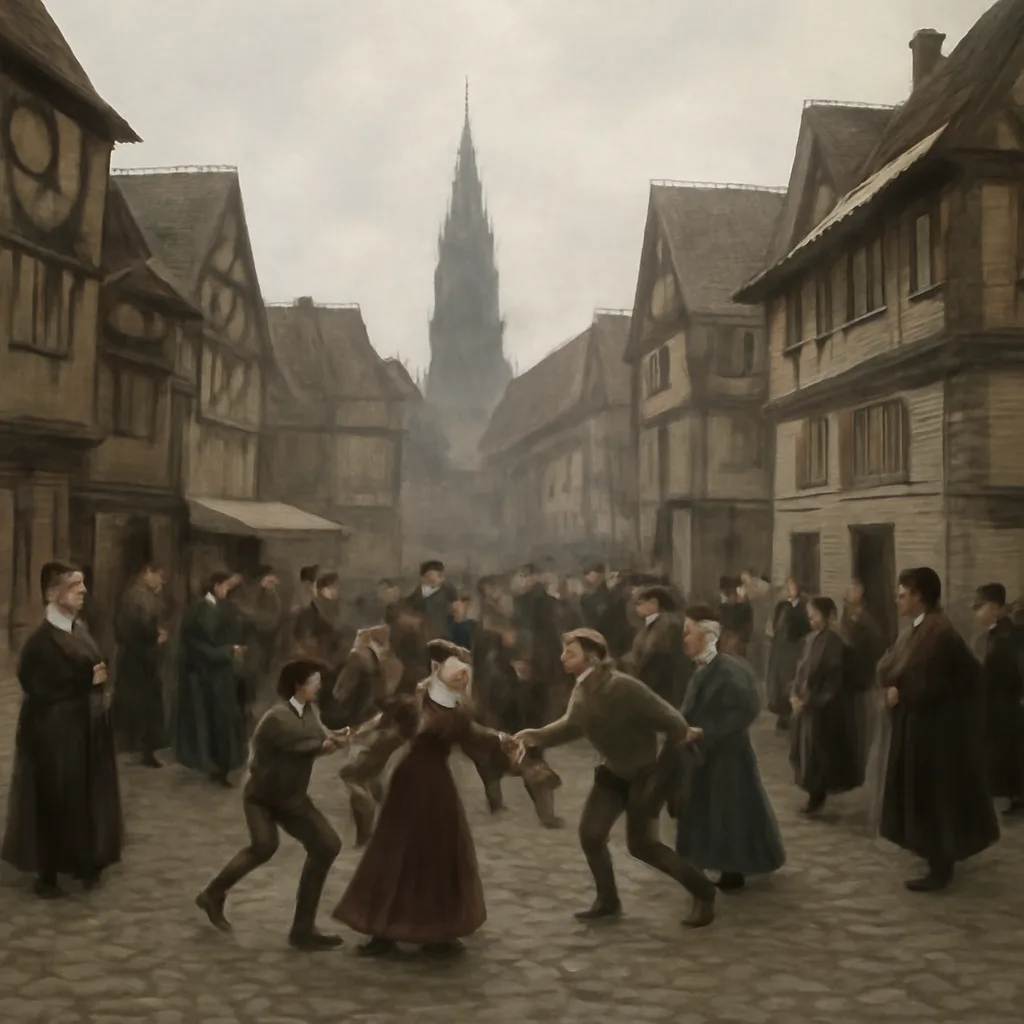
On 22 February 1518 a woman identified in contemporary sources as Frau Troffea stepped into a street in Strasbourg (then part of the Holy Roman Empire) and began to dance fervently and uncontrollably. Contemporary municipal records and later chroniclers report that more people joined her over the following days and weeks, producing an outbreak of prolonged, involuntary dancing that has come to be known as the 1518 Strasbourg dancing mania or dancing plague. What the records say Primary records are municipal documents from Strasbourg and accounts by local physicians and clerics. These sources describe a sudden onset in late February 1518 when one person danced for hours, then days; soon others—estimated in different accounts from dozens to over a hundred—were affected. City authorities, concerned about public order and health, tried several responses: they moved dancers to a shrine dedicated to St. Vitus, instituted public processions and hired musicians and stages, and later confined some victims. The records also note fatalities, though numbers and causes (exhaustion, stroke, or other illnesses) are debated among historians. Context and conditions Strasbourg in 1518 was a densely populated city facing hardship: food shortages, disease, and socioeconomic stress were common in early modern Europe. Religious belief, folk traditions, and medical understanding (rooted in humoral theory) shaped how contemporaries interpreted unusual mass behaviors. Dancing manias—episodic outbreaks of rhythmic movement and trance-like states—are documented in various medieval and early modern European sources, but the Strasbourg episode is among the most thoroughly recorded from the period, which is why it is often cited as the first well-documented case. Interpretations and debates Scholars offer several nonexclusive explanations. Some interpret the event as a form of mass psychogenic illness (mass hysteria by older terminology), where psychological distress and social pressures produce shared somatic symptoms. Others emphasize ritual, religious, or ecstatic practices that could take on contagious qualities in communities under stress. Medical historians point to contemporary prescriptions (music and processions) that reflect period beliefs about treatment. More speculative or fringe explanations—such as ergot poisoning from contaminated grain—have been proposed but are controversial; many historians note that ergotism does not neatly match the symptoms and social dynamics in the records. Why this event matters The Strasbourg episode illuminates how early modern societies responded to collective, poorly understood behaviors and how medical, religious, and civic authorities interacted. It also shows the limits of historical evidence: while municipal records document occurrences, they rarely provide exhaustive clinical detail, so modern diagnoses remain interpretive. The 1518 case has informed studies in social history, medical humanities, and the anthropology of ritual and emotion. Remaining uncertainties Key details remain disputed or unclear: precise numbers affected, definitive causes of reported deaths, and the internal experiences of participants (contemporaneous accounts rarely record sufferers' own testimony). Because primary sources are fragmentary and were written through the lens of period beliefs, historians proceed cautiously, weighing multiple plausible explanations rather than asserting a single definitive cause. Further reading For reliable context, consult works by historians of medicine and early modern Europe that analyze primary Strasbourg documents and place the episode within broader patterns of collective behavior in the period. Avoid summaries that present a single sensational cause without referencing the documentary basis and historiographical debate.