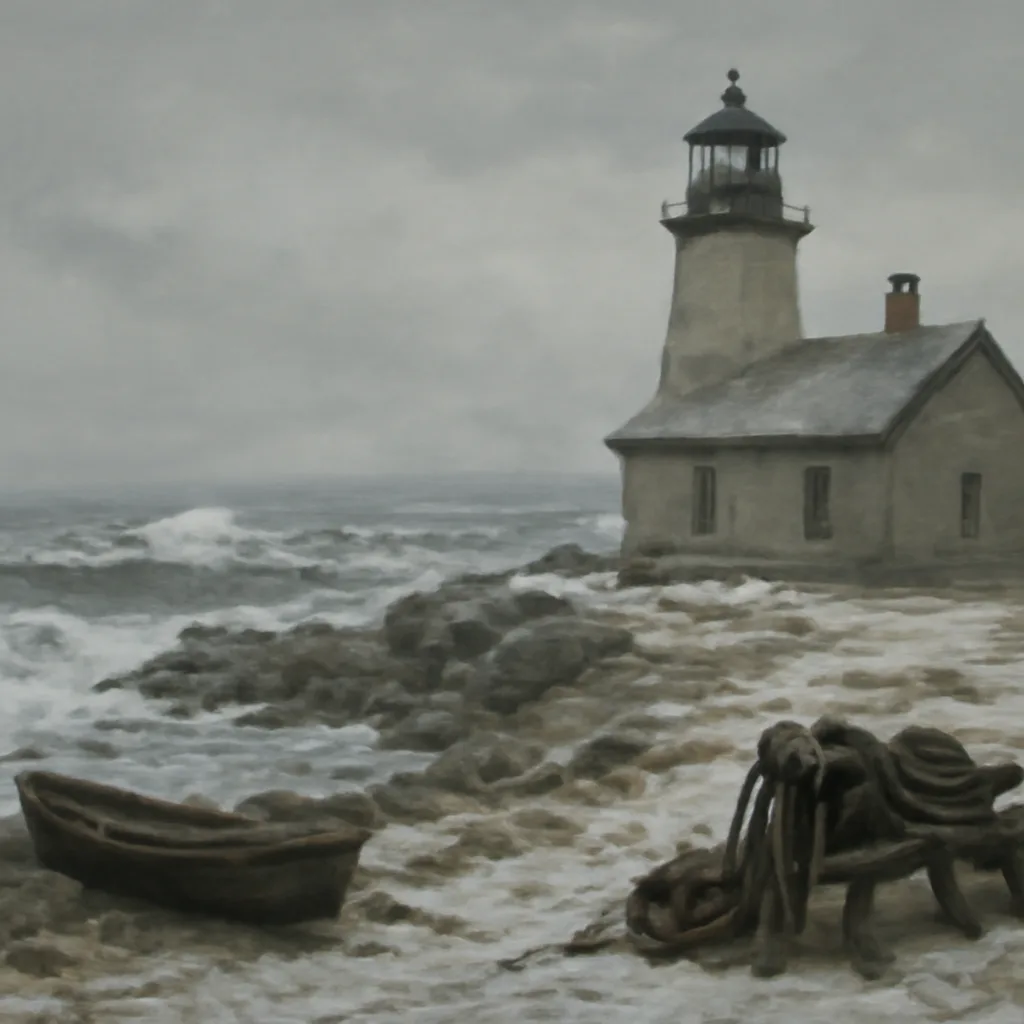
On 15 February 1900 a lighthouse crew was reported missing from an isolated light station, an event notable as one of the earliest documented instances in which an entire keeper party vanished while on duty. Accounts from the period stress hazardous winter conditions, the remoteness of many stations, and the limited means of communication and rescue available to lighthouse services at the turn of the 20th century. Historical context Lighthouse keepers in 1900 worked under physically demanding and often dangerous conditions. Many coastal and offshore stations were accessible only by small boats or treacherous footpaths, and the winter months could bring storms, heavy seas, and blizzards. Keepers maintained lights, fog signals, and basic weather observations; they also assisted in rescues when possible. The combination of exposure, isolation, and reliance on small craft made accidents and disappearances a recognized risk. The reported disappearance Contemporary newspaper notices and service logs (where preserved) indicate that on or about 15 February 1900 a keeper party failed to return or was found to be absent at a scheduled inspection or relief visit. Investigations at the time typically examined boat logs, shore observations, and sea conditions. In many such cases note was made of battered small boats, missing tenders, or evidence of a struggle, but conclusive physical evidence—such as bodies or a definitive wreck site—was often lacking. The record for this specific February 1900 incident reflects that uncertainty: reports emphasize the crew's absence and the plausibility of a marine accident but do not establish a definitive cause. Limitations of the historical record Records from this era vary in quality and completeness. Official lighthouse service logs, maritime inquiry reports, and newspaper coverage can contradict one another or omit details. Financial and administrative records sometimes note the reassignment of stations or replacement of personnel without fully explaining prior absences. Where graves, wreckage, or corroborating testimony were not available, authorities frequently closed cases as accidents with presumed loss at sea. Because of these gaps, historians treat early disappearance reports cautiously: they are important documentary evidence of the risks faced by lighthouse crews, but they rarely provide a complete factual account of what occurred. Why the incident matters This February 1900 disappearance illustrates broader themes in maritime history: the dangers of coastal service work, the limits of early search-and-rescue and communications technology, and the human cost of maintaining navigational aids before modern automation. Such cases contributed to later reforms—improved boat gear, better weather forecasting, radio communications, and eventually automated lights—that reduced but did not eliminate the hazards to those serving at remote lights. What remains uncertain For this specific event the precise sequence of events, the fate of individual crew members, and any exact cause (capsize, collision, overwash, medical emergency, or other) are not definitively recorded in surviving primary sources. Researchers rely on fragmentary official logs, period newspapers, and later compilations that sometimes repeat the same uncertainties. As with many maritime disappearances of the era, the absence of conclusive physical evidence leaves the incident in the historical record as a documented disappearance rather than a fully explained tragedy. Further research Those seeking more detail should consult surviving lighthouse service logs, local maritime inquiry records, contemporary newspaper archives for the coastal region in question, and regional historical societies that preserve correspondence and station reports. Any definitive statements should be grounded in those primary sources or in archival citations that note the limits of the surviving documentation.