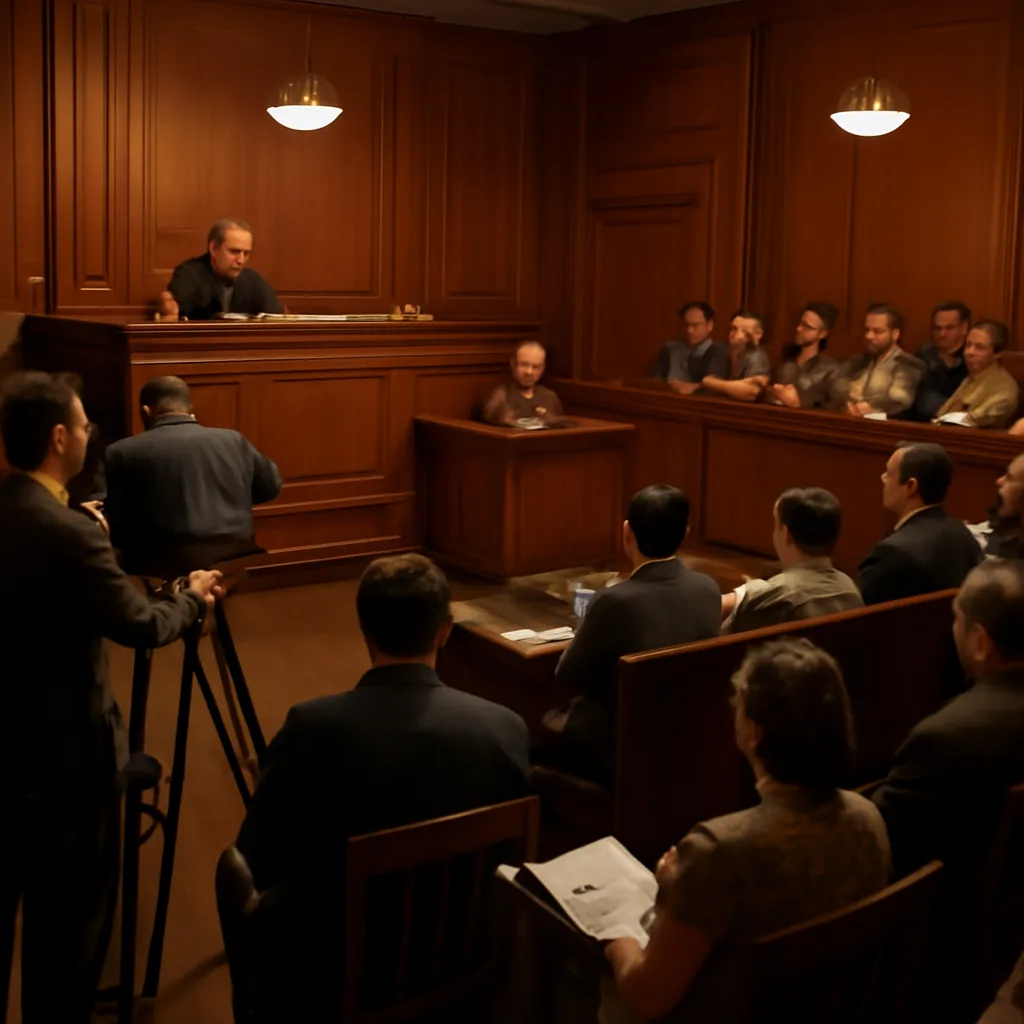
Television Enters the Courtroom: First U.S. Televised Murder Trial Begins in Early February 1954
On February 5 (year disputed in sources), 1954 marked the start of what is widely described as the first U.S. televised murder trial, a milestone in media and legal history that raised questions about courtroom publicity, juror influence, and the ethics of broadcasting criminal proceedings.
In early February 1954 a criminal trial in the United States became the first widely reported murder trial to be televised, initiating a long-standing debate over the presence of broadcast cameras in courtrooms. Contemporary accounts identify February 5 as the starting date for the televised proceedings, though some sources differ on the exact trial and local arrangements, reflecting the uneven adoption of cameras across jurisdictions in the 1950s.
By the early 1950s television was rapidly expanding into American homes, and media organizations sought access to public institutions, including courts. Prior to 1954, cameras had been allowed in some civil proceedings and in limited legislative sessions, but criminal trials—especially murder cases—were seen as sensitive because of concerns about juror impartiality, witness intimidation, and the dignity of the court. The decision to permit television coverage of a murder trial represented a turning point in public access to legal processes.
The televised trial in February 1954 drew national attention because it combined two potent public interests: high-profile criminal justice and the burgeoning power of broadcast media. Newsreels and newspapers reported on the novelty of seeing live courtroom scenes in people’s living rooms, while legal commentators and judges debated whether television would educate the public about the judicial process or distort it by favoring spectacle over substance.
Reactions were mixed. Advocates of televised trials argued that broadcasts promoted transparency and civic education, allowing citizens to observe how courts operate without being physically present. Critics warned of potential harms: cameras might alter witness testimony, influence jurors, encourage sensationalism by networks seeking higher ratings, and infringe on the privacy of victims and defendants. Within a few years, many courts and some state supreme courts limited or banned cameras in criminal trials in response to these concerns and to inconsistent local policies.
The 1954 experiment did not produce an immediate, uniform policy. Throughout the latter half of the 20th century, U.S. courts adopted a patchwork of rules: some jurisdictions permitted limited photography or broadcasting under strict conditions, while others prohibited it outright. The U.S. Supreme Court has generally barred cameras from its oral arguments, a policy that remained in place through much of the 20th century and into the 21st, though some lower federal courts and many state courts have since allowed varying degrees of media access.
Scholars studying the history of cameras in courtrooms point to the early televised trials of the 1950s as formative moments that shaped later policy debates about public access, media influence, and courtroom decorum. The issues raised in 1954—fair trial rights, judicial control of the courtroom, and the public’s right to know—continue to inform contemporary discussion as technology evolves and as live streaming and social media create new ways to record and distribute courtroom proceedings.
Because contemporary reporting and later histories sometimes disagree on specifics—such as which local court was the first to allow cameras in a murder trial and whether February 5 should be treated as the definitive start date—historians emphasize caution in naming a single, uncontested “first” televised murder trial. What is clear is that the events of early February 1954 stand as an early and influential instance of television entering criminal courtrooms in the United States, setting precedents and controversies that endure.