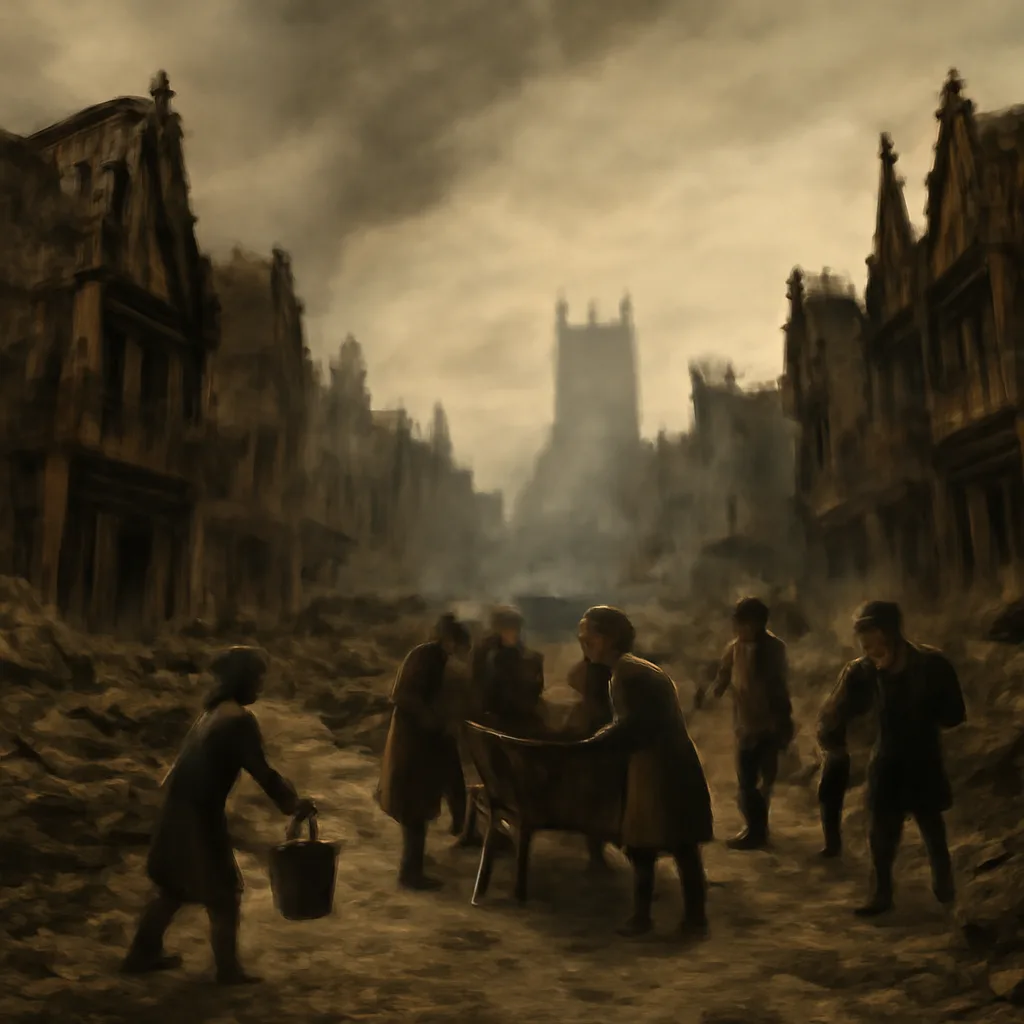
On May 8, in a Restoration London emergency now recorded in contemporary accounts, civic and royal officials declared that the Great Fire ravaging parts of the city had been brought under control and was officially extinguished. The date signals the end of active firefighting and the start of extensive salvage, cleanup and policy responses directed at rebuilding the urban fabric. The Great Fire had spread rapidly across densely built timber-framed streets, fuelled by narrow alleys, overhanging eaves and a summer breeze that carried embers from roof to roof. In the weeks before the declaration, watchmen, soldiers, parish constables and able-bodied citizens fought fires using leather buckets, hand-pumped engines where available, and the demolition of houses to create firebreaks. Records from the period describe wide-scale displacement of residents, emergency shelters in churches and open fields, and nightly patrols to guard smoldering ruins from looters and rekindling. By the time authorities announced the fire extinguished on May 8, the immediate danger of active conflagration had passed, but the city still faced enormous challenges. Streets were choked with rubble, many churches and guildhalls lay in ruins, and much of the housing stock was uninhabitable. Local government and royal commissioners began compiling lists of the destroyed properties to assess losses and plan reconstruction. Relief efforts included temporary lodging, food distributions managed by churchwardens and parish officials, and coordination with charities to assist the poor and displaced. The declaration also accelerated legal and administrative responses. Officials moved to record property boundaries, leases and tenancies—often a contested and complex process following widespread destruction. Where records had been lost in the fire, courts and committees heard claims and disputes about ownership and rebuilding rights. Furthermore, the crisis prompted early discussions about urban improvement: proposals for wider streets, the use of less flammable building materials, and regulations on overhanging timber. While comprehensive citywide rebuilding plans would take time to formulate and execute, the extinguishing of the fire was a necessary precondition for any coordinated reconstruction. Economic consequences were immediate and severe. Merchants and artisans who had stored goods in the affected quarters suffered heavy losses; insurance mechanisms of the period were rudimentary and unevenly available. Markets and docks experienced disruption as trade routes adjusted. At the same time, rebuilding created demand for carpenters, masons and laborers, and for materials such as brick and tile where those were accessible, shaping patterns of recovery in different neighborhoods. Socially, the catastrophe intensified existing inequalities. Wealthier property owners often had resources to rebuild or to press claims, while poorer households faced protracted displacement. Parishes and charitable institutions bore much of the burden for relief, and records from analogous incidents show extensive parish-led assistance programs. The need to rehouse large numbers of people also raised concerns about public health, sanitation and the risk of further disorder during the recovery phase. Contemporary observers treated the date when the fire was declared extinguished as a turning point: it marked the end of immediate danger and the beginning of reconstruction and reform. However, the physical and administrative aftermath persisted for months and years—clearing rubble, redefining streets, settling legal disputes, and slowly restoring economic activity. The declaration on May 8 was therefore less an end than a formal transition from firefighting to the long and uneven processes of recovery and urban change. Note on dating: The user-supplied event month and day (May 8) are preserved here; the year of the event is not specified in source materials provided to this summary, and multiple historical fires in London’s history have varying chronologies. Where precise year attribution is required, consult primary archival records or contemporary municipal accounts for confirmation.