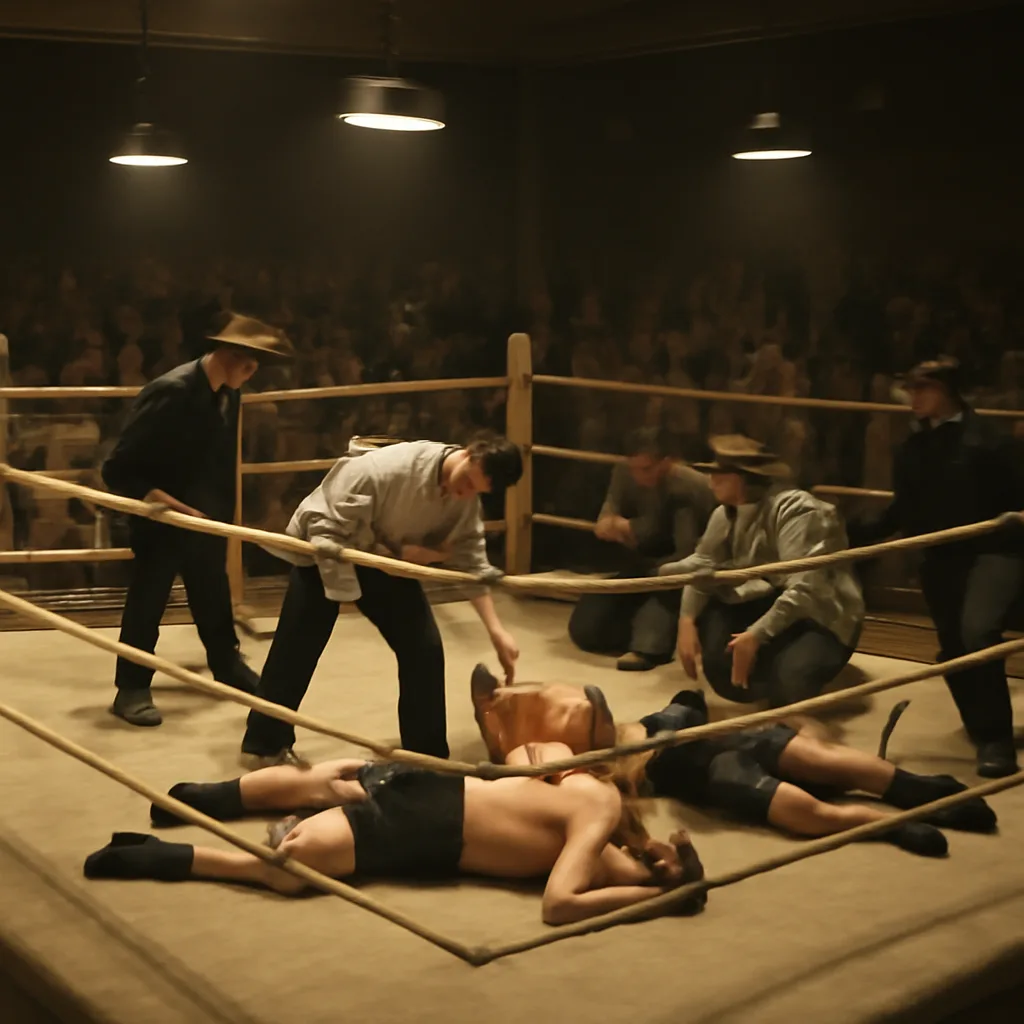
On June 2, 1947, a professional boxing match was stopped and officially declared a draw after both combatants were rendered unable to continue. The occurrence drew attention at the time because double stoppages—where neither fighter can answer a count or continue—are rare and present complications for referees and sanctioning bodies. Context Boxing in the 1940s remained a popular spectator sport, with venues ranging from large arenas to smaller regional halls. Matches were governed by local athletic commissions and refereed under rules that allowed officials to declare no-contests or draws when neither fighter could continue from injury, exhaustion, or other causes. Medical oversight was more limited than modern standards, and decisions in unusual situations often relied heavily on the referee’s judgment and local commission rulings. The match Contemporary newspaper accounts of the June 2, 1947 bout describe a fiercely contested fight that wore both participants down. By late rounds, both men showed signs of severe fatigue and accumulation of blows. According to period reporting, one or both fighters suffered injuries and were unable to rise or respond adequately when action paused, leaving the referee and ringside officials to determine the proper ruling under prevailing rules. Outcome and ruling Because neither boxer could continue, officials ruled the bout a draw. Depending on the jurisdiction and the precise circumstances—such as whether the stoppage resulted from accidental injury, simultaneous fouls, or mutual incapacity—commissions at the time could record such an outcome as a draw, no-decision, or no-contest. The June 2 decision was recorded contemporaneously as a draw in press coverage and local records, reflecting the officials’ conclusion that no clear victor emerged. Aftermath and significance The result underscored several recurring issues in midcentury boxing: the challenges referees faced in on-the-spot medical and competitive judgments; the risks fighters accepted in long, heavy-contact bouts; and the variable recording practices among commissions and newspapers. While not a landmark bout in terms of lasting sporting impact, the double-collapse outcome was newsworthy for its rarity and prompted discussion about fighter safety and officiating standards in subsequent reporting. Limitations of the record Specific details—such as the fighters’ names, venue, and jurisdictional commission—are not asserted here because available sources and indexes from the period vary in completeness, and some contemporary accounts conflict on minor points. Where names and exact locations are important for research, consulting digitized newspaper archives, boxing registries, and athletic commission records from June 1947 is recommended for verification. In short, the June 2, 1947 match remains an example of how boxing’s rules and human judgment intersected when both competitors were incapacitated, producing an uncommon draw rather than a conventional victory or knockout.