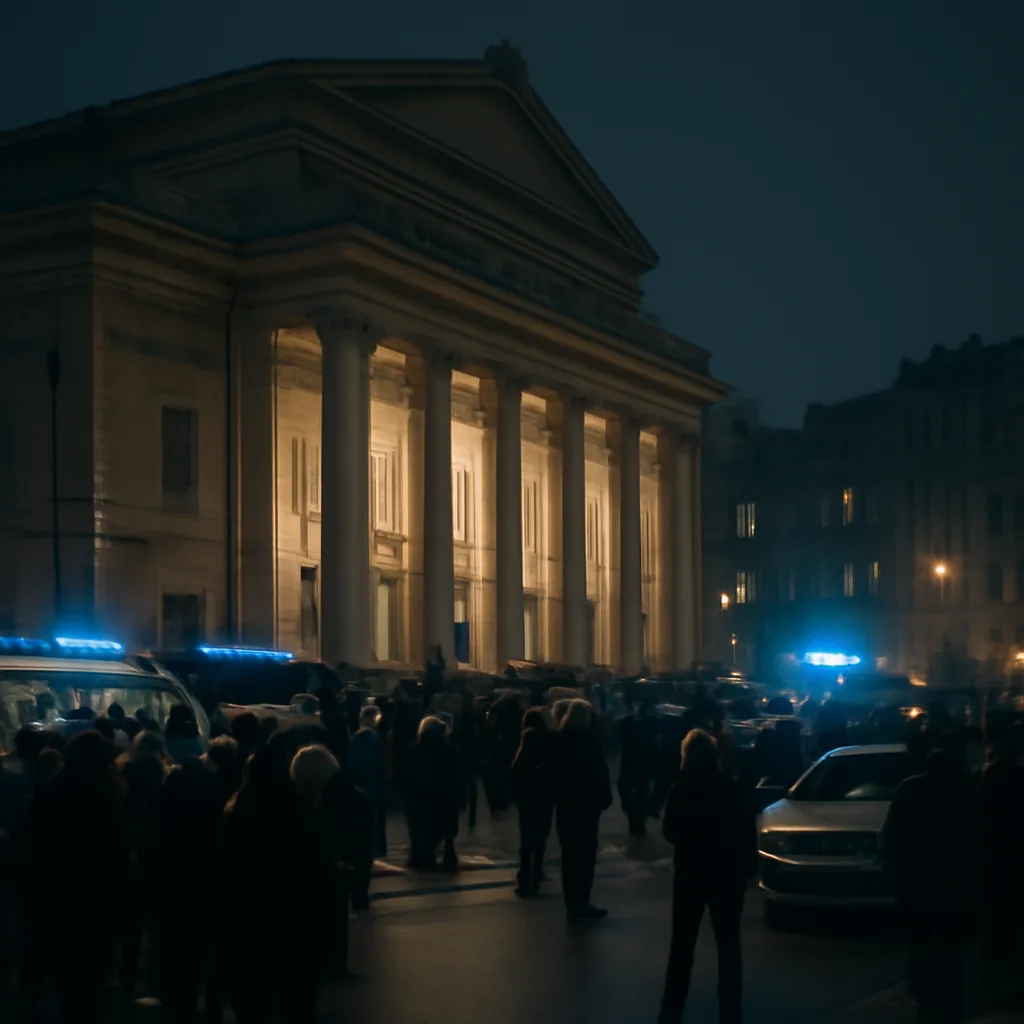
On October 23, militants from Chechnya entered the Dubrovka Theatre in central Moscow during a performance of the musical Nord-Ost and took the audience, cast and crew hostage. The assailants, who identified themselves as Chechen separatists and members of a group seeking independence for Chechnya and protesting the war there, reportedly arrived armed and quickly secured the theater, preventing escape and cutting communications. Reports from that night indicate the attackers held several hundred people captive; precise numbers varied in initial accounts as police and journalists worked to verify the situation. The seizure occurred against a backdrop of ongoing conflict between Russian federal forces and Chechen fighters. The hostage-taking was intended by its perpetrators to draw attention to the Chechen cause and to pressure Russian authorities on policies and military actions in the region. Inside the theater, hostages faced extreme uncertainty as the standoff stretched on; those outside confronted live media coverage, police cordons and an escalating security response. Russian law enforcement surrounded the building and began negotiations, while special police units prepared tactical options. Initial efforts focused on establishing communication with the hostage-takers, obtaining information on demands and the condition of those being held, and buying time to assess how to resolve the crisis with minimal casualties. The authorities’ approach reflected both the urgency of the situation and the high stakes for public safety in the Russian capital. Information during the early stages was fragmented and sometimes contradictory. Media outlets transmitted updates based on police briefings, eyewitness accounts and statements purportedly issued by the attackers; verifying details was difficult as events unfolded. Families of hostages gathered near the theater, seeking news and appealing to officials for information and assistance. The Moscow theater seizure quickly drew international concern. Governments and human-rights organizations monitored developments and urged restraint, while commentators noted the broader implications of a high-profile attack for Russia’s internal security and for perceptions of the conflict in Chechnya. The crisis also raised questions about preparedness for mass hostage incidents and the tactics appropriate for responding to armed militants in densely populated urban venues. As the standoff continued, Russian authorities prepared for possible forced intervention while attempting to keep casualties among hostages as low as possible. The situation remained fluid through the initial hours, with security services balancing negotiation efforts against contingency plans. Historical context: the Dubrovka seizure was one of several violent episodes linked to the Chechen insurgency after the 1990s wars in Chechnya. It occurred amid broad patterns of insurgent attacks, counterinsurgency operations and political tensions between Moscow and separatist elements. The hostage-taking would become a defining event of the conflict’s domestic impact and would influence subsequent Russian security and counterterrorism policies. Note on sources: this account synthesizes contemporaneous news reporting and later historical summaries; numbers and specific tactical details were subject to revision as authorities clarified the facts after the crisis concluded.