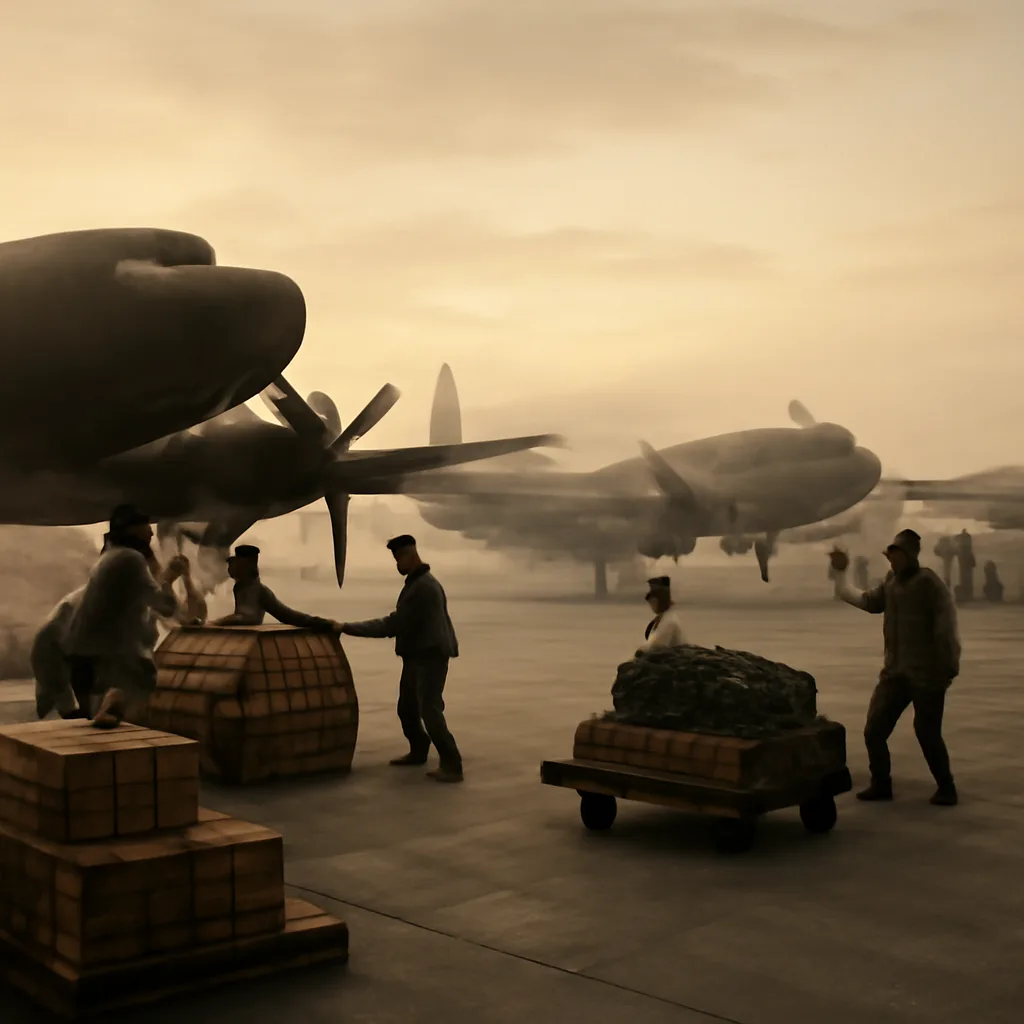
In late June, Allied air forces launched a sustained operation to deliver food, coal, medicine and other essential supplies to West Berlin after Soviet authorities sealed road, rail and water routes into the western sectors of the city. The blockade left roughly two million residents dependent on external aid. Faced with the prospect of famine and a political crisis in the early postwar period, British and American commanders moved quickly to establish an organized airlift. Aircraft of varying types—transport planes capable of carrying heavy cargo and smaller aircraft for lighter loads—operated from bases in western Germany and England. Flights were scheduled at short intervals to create a continuous supply chain; crews worked around the clock. Ground handling in Berlin involved rapid unloading and redistribution to local authorities and relief organizations. Coal, a critical winter fuel, required specially configured loading procedures and posed particular logistical challenges. The airlift served multiple purposes: immediate humanitarian relief, political signaling to the Soviet Union and domestic reassurance to populations in the western zones. Western leaders framed the operation as a nonviolent means to uphold access rights established among the occupying powers after World War II. Soviet officials, who had implemented the blockade to press their demands over Berlin’s future and allied policies in Germany, denounced the airlift but did not use force to stop the flights. Operationally, the effort demanded unprecedented coordination across military and civilian agencies. Pilots and crews contended with weather, air-traffic constraints in a crowded corridor, and the need for rapid turnaround on the ground. Over time, procedures were refined: standardized cargo pallets, improved scheduling, and the use of larger aircraft increased efficiency and tonnage delivered per day. The Berlin airlift became a defining episode of early Cold War confrontation without direct armed conflict. It prolonged Western presence in the city’s western sectors and bolstered the morale of Berliners who received supplies and reassurances of allied commitment. The operation continued for months until negotiations and changing circumstances led to the lifting of the blockade. Historians note that accounts vary on exact dates and the sequence of some decisions made by political and military leaders. Contemporary reports and later studies agree, however, that the airlift represented a sustained, large-scale logistic and political response to the blockade and shaped Cold War dynamics in Europe.