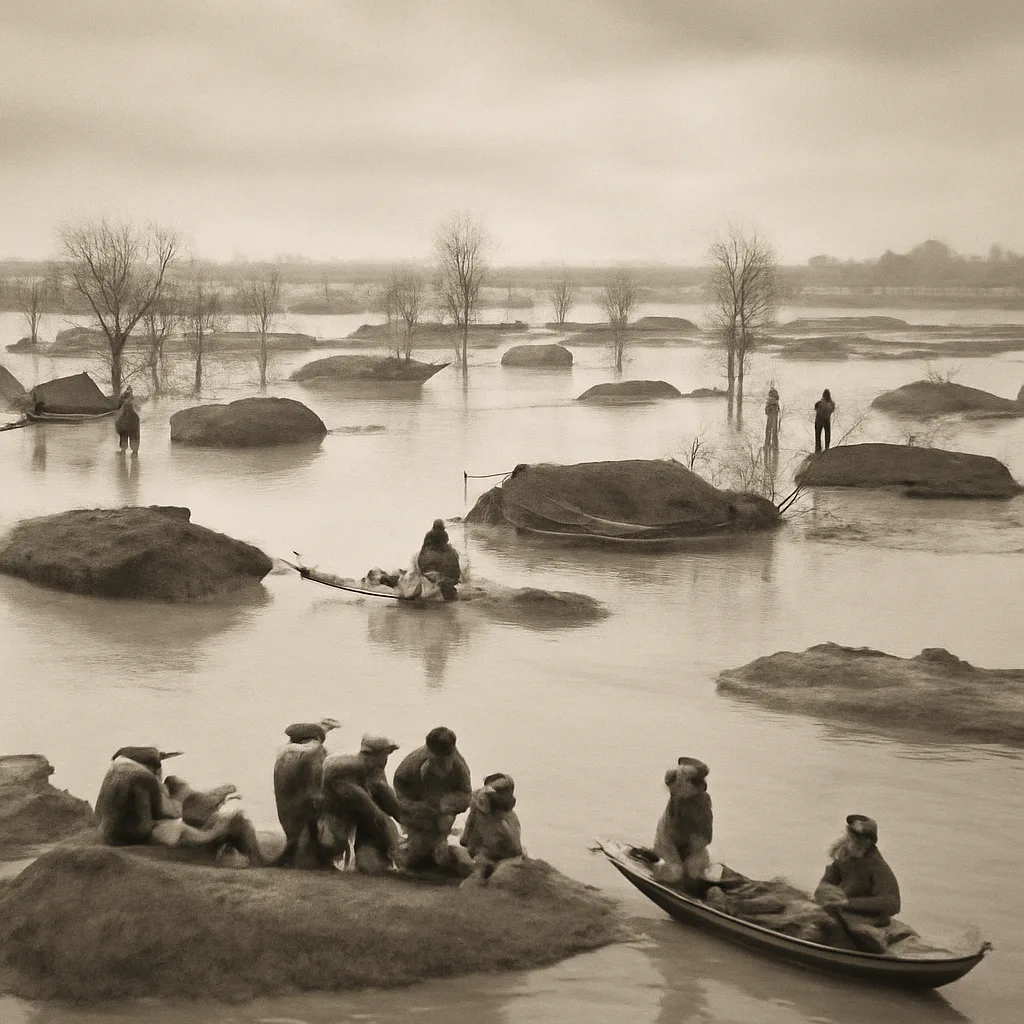
1931 Yangtze floods overwhelm central China, causing enormous loss and displacement
From spring to autumn 1931, exceptional rains and swollen rivers produced catastrophic flooding across the Yangtze basin, killing hundreds of thousands to possibly millions and displacing millions more, while compounding famine, disease, and social disruption in Republican China.
Between spring and autumn 1931, a sequence of unusually intense rains, snowmelt, and high river levels produced catastrophic flooding across the Yangtze (Yangzi) River basin and adjacent basins in central and eastern China. The disaster ranks among the deadliest natural events of the 20th century: contemporary and later estimates of deaths directly and indirectly attributable to the floods vary widely, from several hundred thousand to upwards of a million or more, reflecting differing methods of counting fatalities from drowning, disease, and famine in the months that followed.
Meteorological and hydrological context
A series of heavy monsoon rains beginning in late spring, combined with earlier heavy snowfall in upstream regions and unusually high water in tributaries including the Huai and Yellow rivers, produced extreme runoff into the Yangtze system. By July and August 1931, water levels at key gauges along the Yangtze exceeded historical records. Levees and dikes—many poorly maintained in the politically fragmented Republic of China—were breached or overtopped at dozens of points, allowing floodwaters to inundate vast swathes of farmland, towns, and cities.
Geographic extent and impacts
Flooding affected large parts of Hubei, Hunan, Jiangsu, Anhui, Jiangxi and surrounding provinces. Major urban centers, smaller market towns, and rural counties were all hit. Crops and stored grain were destroyed on a massive scale, leading to acute food shortages in inundated regions. Transportation and communications were disrupted; rail lines, roads and river ports were damaged or rendered unusable for weeks to months. The inundation of wells and contamination of water supplies, combined with crowded refugee conditions, contributed to outbreaks of waterborne and infectious diseases, including cholera and dysentery.
Human toll and displacement
Estimates of deaths and displacement differ. Contemporary Chinese and foreign relief reports documented very large numbers of drowned victims and of people who later died from disease and starvation. Many historians cite a commonly cited figure of several hundred thousand direct deaths and total deaths (including famine and disease) reaching into the hundreds of thousands or possibly over a million; however, exact totals remain uncertain because of incomplete records, population movements, and differing definitions of flood-related mortality. Equally severe was the scale of displacement: millions of people were rendered homeless, living on higher ground, boats, makeshift camps, or in cities already strained by refugees.
Relief efforts and longer-term consequences
Relief was provided by local authorities, private charity groups, religious organizations, and international relief agencies, but resources were overwhelmed by the scale of need. The crisis exacerbated existing social and political tensions in a China already dealing with internal conflict, economic instability, and limited state capacity. The loss of agricultural output contributed to food shortages beyond the immediately flooded zones and disrupted local economies for months and years. The 1931 floods also prompted later engineering and institutional responses—such as debates over levee construction, basin-wide flood control, and river management—that would shape Chinese water control policies in subsequent decades.
Historical assessment and uncertainties
Scholars continue to debate precise casualty figures and the relative contributions of meteorological extremes versus human factors (such as land use, levee design, and maintenance) in producing the disaster’s severity. The scale of the catastrophe, the interplay of environmental and social factors, and the resulting humanitarian crisis make the 1931 Yangtze floods a major event in modern Chinese and environmental history.
Sources and caution
This summary is based on historical and scholarly syntheses of the 1931 Yangtze floods. Because contemporary records are incomplete and later estimates vary, any single fatality or displacement number should be treated as approximate.